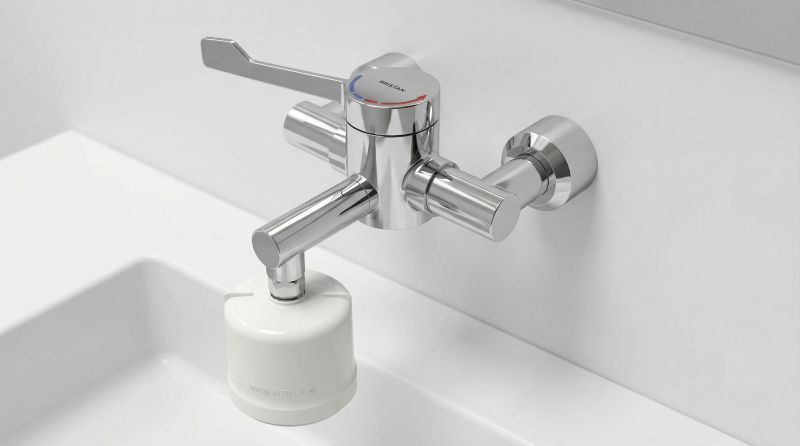
In healthcare and controlled hygiene environments, water safety is not just a regulatory requirement, it’s a matter of patient safety. From hospital wards to laboratories, the risk posed by waterborne pathogens remains a persistent challenge. This is where Point-of-Use (POU) filtration systems play a crucial role, offering a reliable and immediate solution at the final stage of water delivery.
What Are POU Filters?
Point-of-use (POU) filters are installed directly at outlets such as taps and showers. Unlike centralised water treatment systems, these filters act as the last line of defence, ensuring that water is free from harmful microorganisms right where it is used.
Designed specifically for medical and commercial applications, POU filters help reduce the risk of exposure to dangerous pathogens such as Legionella, Pseudomonas and various viruses known to contribute to Healthcare Associated Infections (HCAIs).
Our are delighted to have a Point-of-Use filter range in our portfolio which boasts a 0.2 µm sterilising-grade membrane for absolute bacterial retention plus 0.1 µm pre-filter layer for enhanced protection. This combination ensures absolute retention of bacteria and validated viral protection, making these filters suitable for high-risk environments where water purity is critical.
Designed for Healthcare Safety
POU filters are engineered with healthcare settings in mind. Key features include:
- End-of-tap installation: Quick and easy setup using metal tap spout connectors
- Broad compatibility: Suitable for a wide range of taps and shower systems
- Disposable shower handsets: Designed for infection control and convenience
- Backflow prevention: Reduces the risk of retrograde contamination
- Batch traceability labels: Supports compliance and quality assurance processes
- 31-day filtration lifespan as standard, extended 62 and 92-day options available
Supporting Infection Prevention
POU filters are particularly valuable in protecting vulnerable patients, including those with weakened immune systems. By delivering microbiologically safe water, they help minimise exposure to pathogens such as Legionella, Pseudomonas aeruginosa, Brevundimonas diminuta and Mycobacterium species.
Their use aligns with guidance outlined in the NHS Estates Technical Bulletin (NETB) No. 2024/3, supporting safer water management practices in clinical settings.
In conclusion, environments where infection control is paramount, POU filtration systems offer a dependable safeguard against waterborne pathogens. By integrating advanced filtration technology with practical design, they help healthcare providers create safer spaces, protecting both patients and staff.
As the demand for higher hygiene standards continues to grow, investing in point-of-use filtration is not just a precaution – it’s a proactive step toward better healthcare outcomes.